İlgili Yayın Dosyaları
Policy Note / Ece Berfin Ergezer
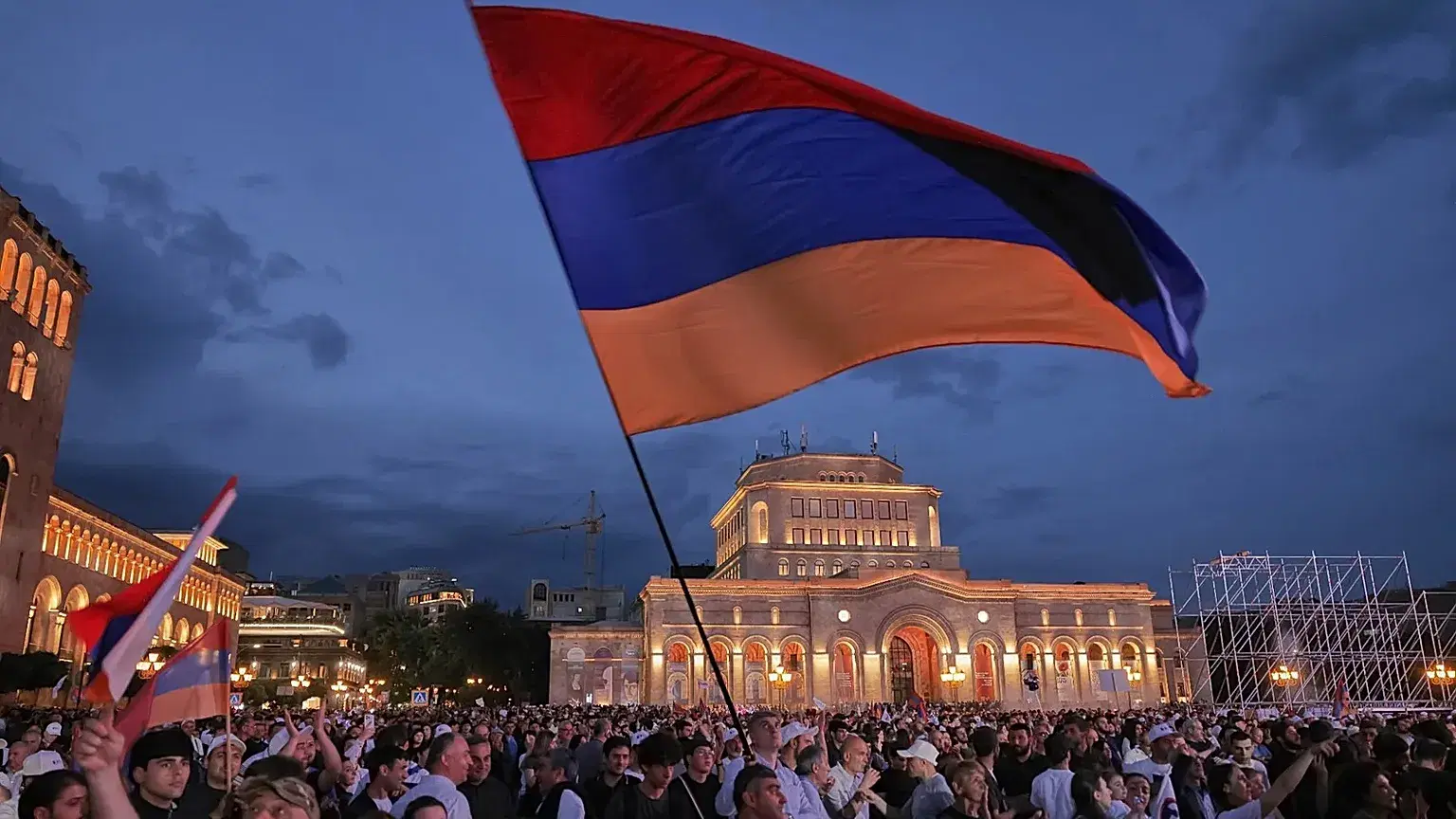
The Armenian parliamentary elections held on 7 June 2026 marked a historic turning point, as they were the first regular elections following the loss of Nagorno-Karabakh in 2023 and the subsequent migration of the Armenian population living in the region. The Civil Contract Party, led by Prime Minister Nikol Pashinyan, secured its hold on power by receiving 49.87 percent of the vote and winning 64 seats in the 105 member parliament. These results should be interpreted not merely as an outcome of domestic political competition, but, in a way, as a referendum in which the Armenian public endorsed a new state vision that moves away from the ideals of “Historical Armenia” and instead seeks peace and prosperity within the borders of “Real Armenia.” Voters granted clear legitimacy to Pashinyan’s strategy of steering the country away from the orbit of its traditional ally, Russia, pursuing integration with the West, and adopting rational peace oriented policies vis-à-vis Türkiye and Azerbaijan.
Although the parliamentary arithmetic grants the Civil Contract Party the authority to form a government on its own, it has not prevented the emergence of a highly polarized opposition bloc in parliament. The Strong Armenia Alliance, backed by businessman Samvel Karapetyan, who is known for his close ties to Russia and conservative political stance, won 23.30 percent of the vote and 29 seats, becoming the main opposition force. Meanwhile, former President Robert Kocharyan’s Armenia Alliance secured 9.94 percent of the vote and 12 seats. On the other hand, the Prosperous Armenia Party, led by pro-Russian oligarch Gagik Tsarukyan, remained at 3.99 percent, narrowly failing to pass the 4 percent threshold and therefore staying outside parliament.
This parliamentary arithmetic has deepened the constitutional deadlock, which remains one of the most significant obstacles facing Armenia. Prime Minister Pashinyan has failed to secure the two-thirds qualified majority in parliament required to put a new constitution directly to a referendum. This situation has the potential to block the peace process, as Azerbaijan insists on the complete removal of references to the Declaration of Independence, associated with the idea of unification with Nagorno-Karabakh, from Armenia’s constitutional framework as an absolute precondition for signing a final peace agreement. Among the possible scenarios are Pashinyan seeking to overcome this political impasse by attracting opposition MPs to his side, or calling a new snap election in order to pave the way for a constitutional referendum. However, for such a referendum to pass, it would require not only the support of a majority of participants, but also the approval of at least 25 percent of all eligible voters. The opposition is therefore expected to use all available means to undermine the process.
You may read policy note from here.