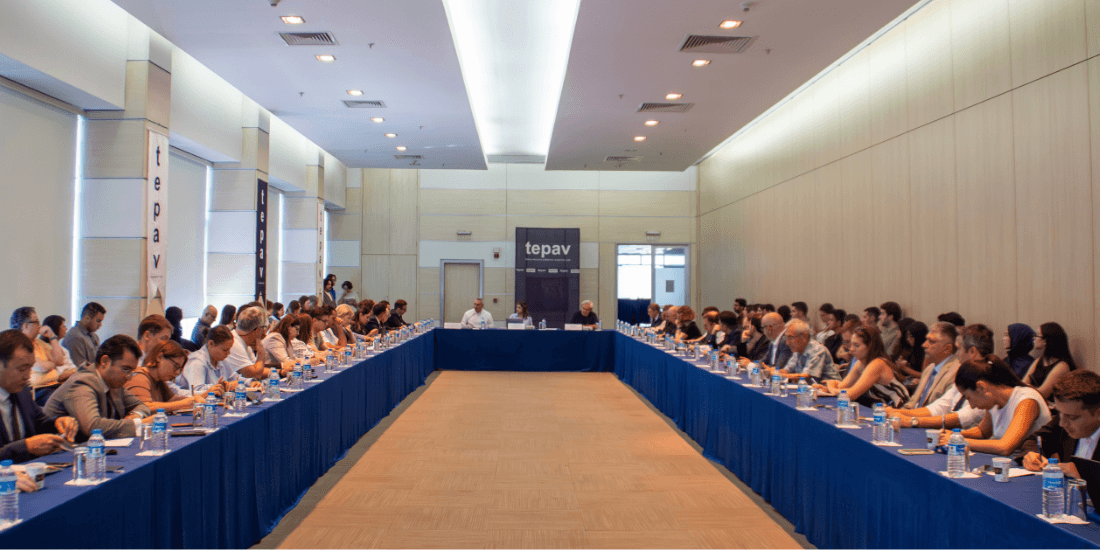
The Economic Policy Research Foundation of Türkiye (TEPAV) hosted a meeting entitled “The Outlook for Armenia-Türkiye Normalization” on 2 September 2026.
The meeting, attended by representatives of public institutions, diplomatic missions, international organizations, universities and think tanks, was moderated by TEPAV Policy Analyst Ece Berfin Ergezer. Richard Giragosian, Director of the Regional Studies Center (RSC), and Güven Sak, Founding Director of TEPAV, spoke at the meeting.
The meeting addressed the current state of the Türkiye-Armenia normalization process, the impact of diplomatic progress between Armenia and Azerbaijan on the process, and opportunities for economic cooperation that could emerge in the South Caucasus. Participants also discussed projects that could be implemented in tourism, industry, information and communication technologies, and transport following the opening of the border.
“The question is not whether normalization will take place, but when”
RSC Director Richard Giragosian stated that Armenia and Azerbaijan had achieved unprecedented diplomatic progress and that this had strengthened expectations regarding Türkiye-Armenia relations.
Noting that circumstances had changed for Ankara, Yerevan and Baku, Giragosian said, “The question now is not whether Armenia-Türkiye normalization will take place, but when.”
Giragosian stated that, in the post-war period, Armenia had recognized the need to normalize its relations with both Türkiye and Azerbaijan. “The new regional environment has also brought geoeconomic opportunities. Alongside the Trump Route for International Peace and Prosperity (TRIPP), the cooperation being developed between Armenia and the United States in the fields of artificial intelligence data centers and chip technologies has created new opportunities for regional economic relations,” Giragosian said.
Emphasizing that opening the border between Türkiye and Armenia would benefit both countries, Giragosian noted that this step could support economic activity, employment and development in eastern Türkiye.
Giragosian stated that the process had entered a new phase alongside the progress made by Azerbaijan. “At the point we have reached today, from Türkiye’s perspective, Azerbaijan is signaling a yellow light. The green light to move forward has not yet been given, but the light is no longer red,” he said.
The regional dimension of the process came to the fore
Stating that communication between the leaders of Armenia and Azerbaijan had made a positive contribution to the process, Giragosian said, “The risk of a new conflict has declined, and political will has grown stronger. In the South Caucasus, a more mature and forward-looking approach to diplomacy has begun to replace nationalist narratives focused on the past.”
Emphasizing that the process should not be considered solely in terms of Türkiye, Armenia and Azerbaijan, Giragosian noted that Central Asia, the Middle Corridor and East-West connectivity offered broader geopolitical and geoeconomic opportunities.
Giragosian stated that the United States and the European Union had contributed effectively to the process without acting as direct mediators. “Normalization is based on genuine, locally driven engagement among the countries of the region. The role of Western countries will gain importance during the implementation of the agreements and the mitigation of risks that may arise from Russia and Iran,” he said.
“What is at issue is the establishment of basic neighborly relations”
Giragosian noted that the normalization of Türkiye-Armenia relations should not be confused with reconciliation or rapprochement, defining the main objective of the process as opening the closed border and establishing diplomatic relations.
“What is at issue here is the establishment of neighborly relations at the most basic level possible. Improving relations between neighboring countries requires engagement and cooperation. Current developments point to an increasingly strong positive trend toward normalization,” Giragosian said.
“This time, the process is trilateral and much stronger”
TEPAV Founding Director Güven Sak stated that the Türkiye-Armenia normalization process differed in structure from the process pursued during the period of football diplomacy in 2010. Recalling that the previous initiative had been conducted mainly between Türkiye and Armenia, Sak noted that Azerbaijan was also involved in the process this time.
“During the football diplomacy period in 2010, the process was essentially bilateral and took place between Türkiye and Armenia. This time, however, it is trilateral. Azerbaijan is also part of the process. The process is therefore much stronger,” Sak said.
Sak stated that TRIPP should not be seen merely as an investment in a route approximately 40 kilometers long, noting that the project could enable the establishment of broader connections extending across the Caspian Sea to Central Asian countries. He added that the route’s connection to Europe should also be strengthened and that numerous new economic opportunities could emerge within this framework.
Work begins on plans for a joint industrial zone at the border
Emphasizing the need to focus on concrete economic projects as part of the normalization process, Sak said, “TEPAV is working to establish a joint industrial zone on the Türkiye-Armenia border. This model, which could also include third parties, may create new opportunities for businesses on both sides of the border.”
Sak also stated that information and communication technologies held significant potential, noting that establishing joint industrial zones in the region could bring together businesses in Türkiye and Armenia. He added that Azerbaijan could also be included in the process through projects involving agriculture, industry and the Caspian crossing.
A new tourism route proposed for Eastern Anatolia
Sak stated that opening the Türkiye-Armenia border would create significant opportunities for the development of tourism in eastern Türkiye. Noting that the number of American tourists visiting Van remained at approximately 500 per year, while the number visiting Armenia reached approximately 100,000, Sak said that opening the border could turn this disparity into a regional development opportunity for Türkiye.
Sak announced that TEPAV had begun working on a tourism program covering Kars, Ani, Van and Hakkari. He stated that a new tourism support program for eastern Türkiye was needed and that discussions were being held with the Ministry of Culture and Tourism.
Waiting times at the Caspian crossing constrain trade
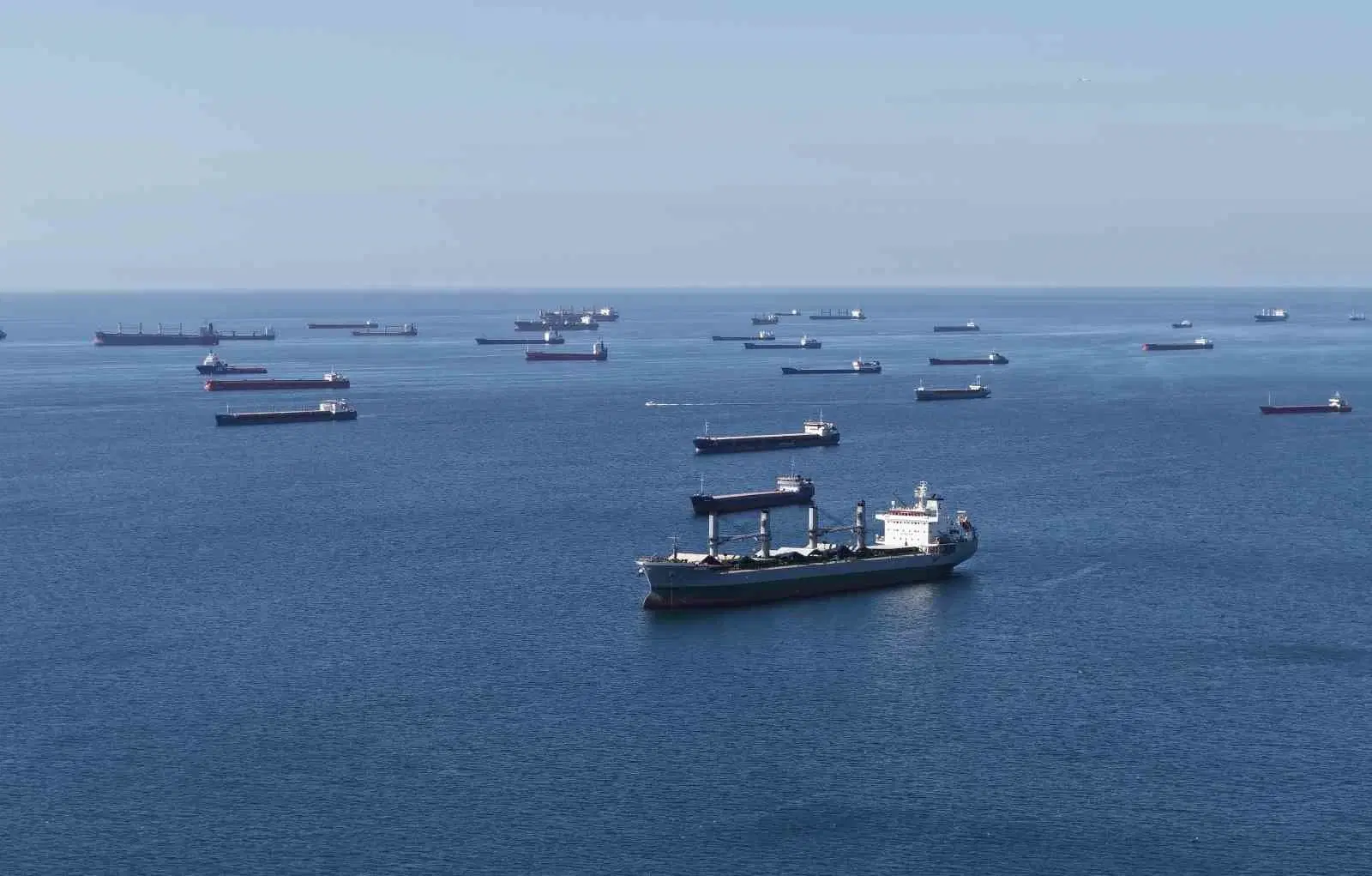
Emphasizing that problems affecting the Caspian crossing needed to be resolved for the South Caucasus to become one of the main links between East and West, Sak noted that although the sea crossing took approximately one day, waiting times at ports on both sides could exceed a combined total of 20 days.
Sak stated that, because of these delays, one of the main logistics routes between East and West remained the Trans-Siberian Railway despite the war in Ukraine. He added that accelerating the Caspian crossing would strengthen the South Caucasus’s position in regional logistics.
Noting that regional conditions had changed completely compared with the normalization initiative of 2010, Sak said, “The time has now come to make progress and focus more on concrete economic cooperation projects.”
The meeting, which addressed diplomatic developments toward the normalization of Türkiye-Armenia relations, as well as the economic and regional opportunities that could arise from opening the border, concluded following a discussion featuring questions and contributions from participants.