

Every attempt to read the enemy’s intentions in the bright light of intelligence and reason runs up against the illusions created by the fog of war.
Carl von Clausewitz
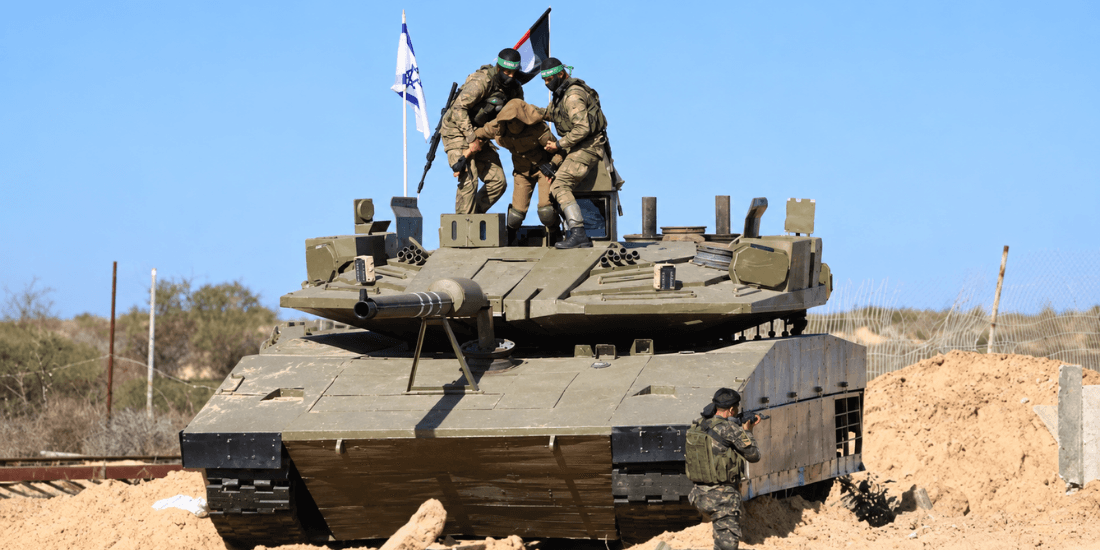
On 7 October 2023, we witnessed a striking event that brought the Middle East’s longstanding problems into a new phase. That day, a group of Hamas members carried out Operation Al-Aqsa Flood using motorcycles, Caterpillar bulldozers and paramotors, and advancing on foot. In scenes reminiscent of a film, the operation brought down Israel’s physical security barrier along the Gaza border. Not only did the security barrier collapse, but Israel’s overconfident approach to security, built on assumptions about deterrence, intelligence superiority and its ability to accurately read its adversary’s intentions, also suffered a severe blow. These coordinated attacks by Hamas and other Palestinian groups from Gaza into Israel killed approximately 1,200 people, most of them civilians, while 251 others were taken hostage and brought to Gaza (International Court of Justice, 2025, p. 18).
The attack came as a shock and drew the world’s attention to the region. It caused deep trauma in Israeli society and was a big “surprise” that profoundly shook the regional order. Some researchers regarded 7 October as a military success for Hamas and a comprehensive failure for Israel (Hokayem, 2023, p. 57).
The strategic significance of this operation, which Hamas named “Al-Aqsa Flood,” stems not only from the scale of the attack but also from its asymmetric nature. Despite its overwhelming military, technological and intelligence superiority, Israel was unable to prevent a weaker actor from seizing the initiative by combining factors such as counterintelligence (CI), surprise, deception and effective timing.
You may read note from here.